
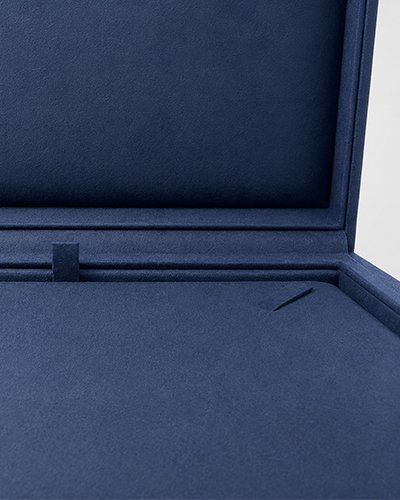
For nearly two decades, velvet had been the default material choice for jewelry boxes. From traditional red velvet ring boxes to deep navy necklace cases, softness and visual richness defined luxury packaging for an entire generation of jewelry brands.
Around 2020, however, the market quietly began to shift.
A growing number of independent jewelry brands, DTC companies, and contemporary designers started moving away from traditional velvet and flocked interiors toward a new material: microfiber.
This was not simply a change in material preference. It reflected a broader transformation in how jewelry brands viewed packaging itself.
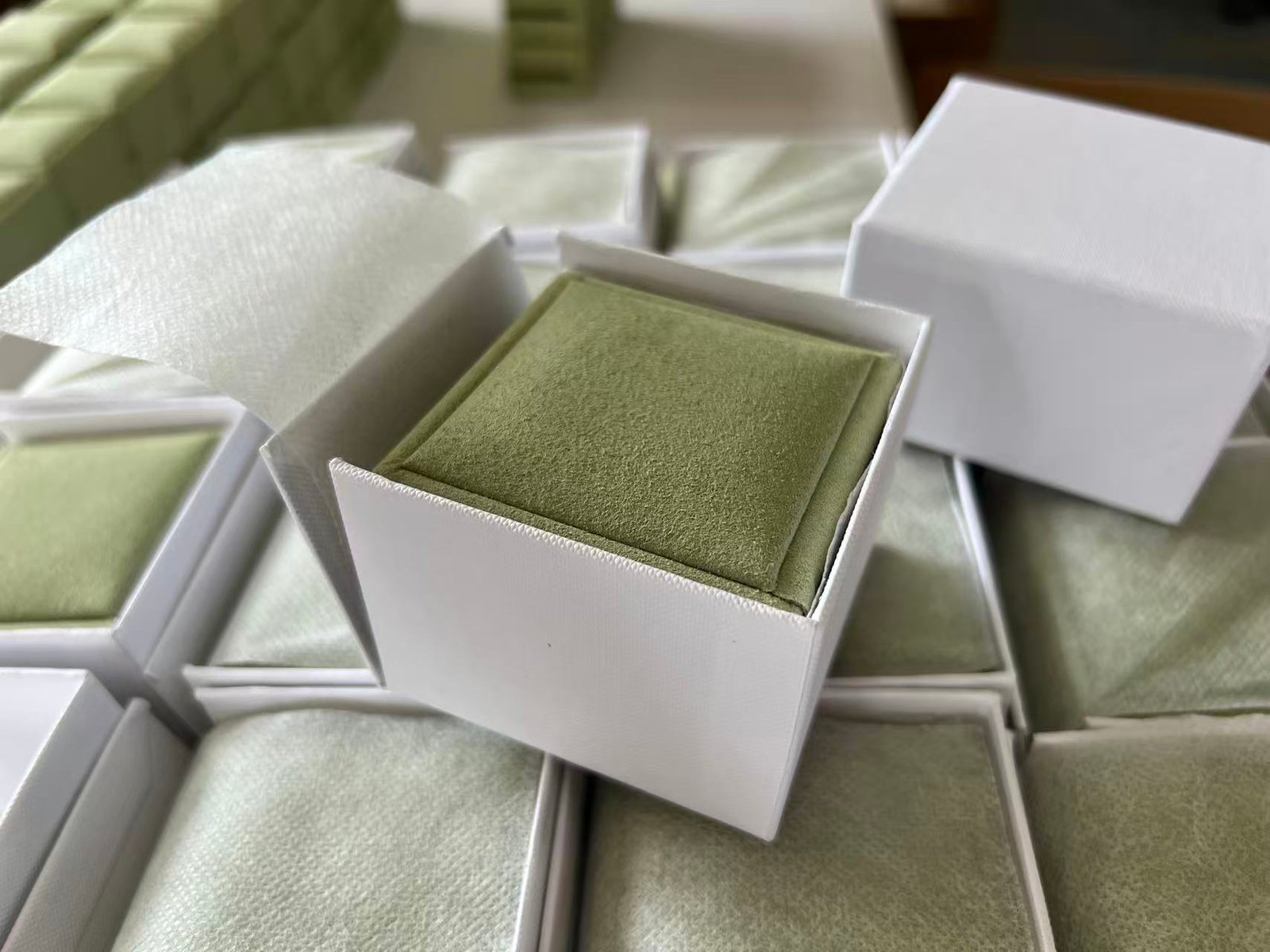
The End of Traditional Velvet Dominance
Velvet had long been associated with luxury, but it also carried limitations that became increasingly apparent as brands evolved:
- It attracted dust and fibers easily.
- Dark colors faded over time.
- Logos and debossed details often lacked definition.
- It struggled to align with the minimalist aesthetics emerging in fashion and jewelry branding.
At the same time, younger jewelry brands were abandoning ornate presentation in favor of cleaner and more contemporary visual systems.
Packaging was no longer expected to resemble a jewelry counter from the 1990s.
Brands wanted packaging that felt:
- Modern
- Architectural
- Tactile
- Understated
Microfiber arrived at exactly the right moment.
The Rise of the “Soft Structure”
One of microfiber’s biggest advantages was its ability to combine softness with structure.
Unlike velvet, microfiber maintained crisp edges and smooth surfaces while still offering a warm tactile experience.
This allowed brands to create:
- Sharp corner constructions
- Minimal embossed logos
- Clean monochromatic palettes
- Consistent visual systems across boxes, pouches, and travel cases
For brands influenced by Scandinavian, Korean, and contemporary European design, this aesthetic felt significantly more relevant than traditional plush velvet packaging
Packaging Became Part of Brand Identity
Around 2020, independent jewelry brands experienced rapid growth through Instagram and direct-to-consumer channels.
Customers were no longer encountering packaging only in stores.
They were discovering it through:
- Unboxing videos
- Social media photography
- User-generated content
- Repeat purchases
Packaging had become a visible extension of the brand itself.
The box was no longer merely protecting jewelry.
It was introducing the brand before the jewelry was even touched. Brands increasingly viewed packaging as a component of customer experience and brand building rather than simple transportation protection